Last updated: November 2026
Earbuds hurt when you sleep on your side because the pillow pushes a hard shell into the cartilage of the ear you lie on, for hours, under your head’s weight. The earbud is half the problem; the surface under your ear is the other half.
Key takeaways
- Cleveland Clinic lists discomfort as a named risk: for side sleepers, earbuds “can press into your ear overnight and cause pain and irritation”, worse with a poor fit (Cleveland Clinic).
- Pressure on the outer ear during sleep is a recognised clinical problem, and one dermatology study recommends taking the load off the ear before considering surgery: 13 of 15 patients (87%) treated with a home-made pressure-relieving device were healed at one month, versus a 34% recurrence rate after surgery (Moncrieff & Sassoon, British Journal of Dermatology).
- A doughnut-shaped pillow left 13 of 23 treated patients pain-free at one-year follow-up in a UK ENT clinic (Sanu, Koppana & Snow, Journal of Laryngology & Otology); Indiana University dermatologists later proposed an ordinary U-shaped neck pillow as the budget version (Mohammed, Isaacs & Rahnama, JAAD).
- The in-ear risks go beyond pain: earbuds can push earwax deeper and trap moisture in the ear canal (Cleveland Clinic).
- Volume matters more at night because nobody turns it down: the WHO-ITU safe-listening standard sets the adult weekly allowance at 80 dB for 40 hours (WHO).
- If the earbuds are there to block noise rather than play sound, a seven-night sleep-lab trial of 25 adults found foam earplugs “efficacious in mitigating the effects” of night-time noise, while pink noise cut into REM sleep (Basner et al., Sleep).
Why do earbuds hurt when you sleep on your side?
They hurt because a side sleeper’s lower ear turns into a load-bearing surface. Lying on your side, the outer ear is folded between your skull and the pillow, and the head’s weight passes through it all night. An earbud adds a small, hard object to that stack. Whatever part of the earbud stands proud of the ear becomes the highest point, so it takes a disproportionate share of the pressure.
Cleveland Clinic names this directly among the risks of sleeping with earbuds: for side sleepers they “can press into your ear overnight and cause pain and irritation”, and poorly fitting earbuds can damage the skin of the ear canal over time. The pillow decides how concentrated that load is: a firm, flat surface meets the earbud head-on, while a gap where the ear sits moves the load off the ear.
What are the 4 things that decide how much earbuds hurt on your side?
Four variables, and only one of them is the earbud.
| Variable | What it changes | What you can do |
|---|---|---|
| Earbud profile | How far the hard shell stands out from the ear, which sets where the pressure peaks | Smaller, flatter buds with soft tips; or no bud at all (see the alternatives below) |
| Fit | A loose bud shifts and rubs; a forced bud presses on the canal wall | Correct tip size; Cleveland Clinic flags poor fit as the case most likely to damage skin |
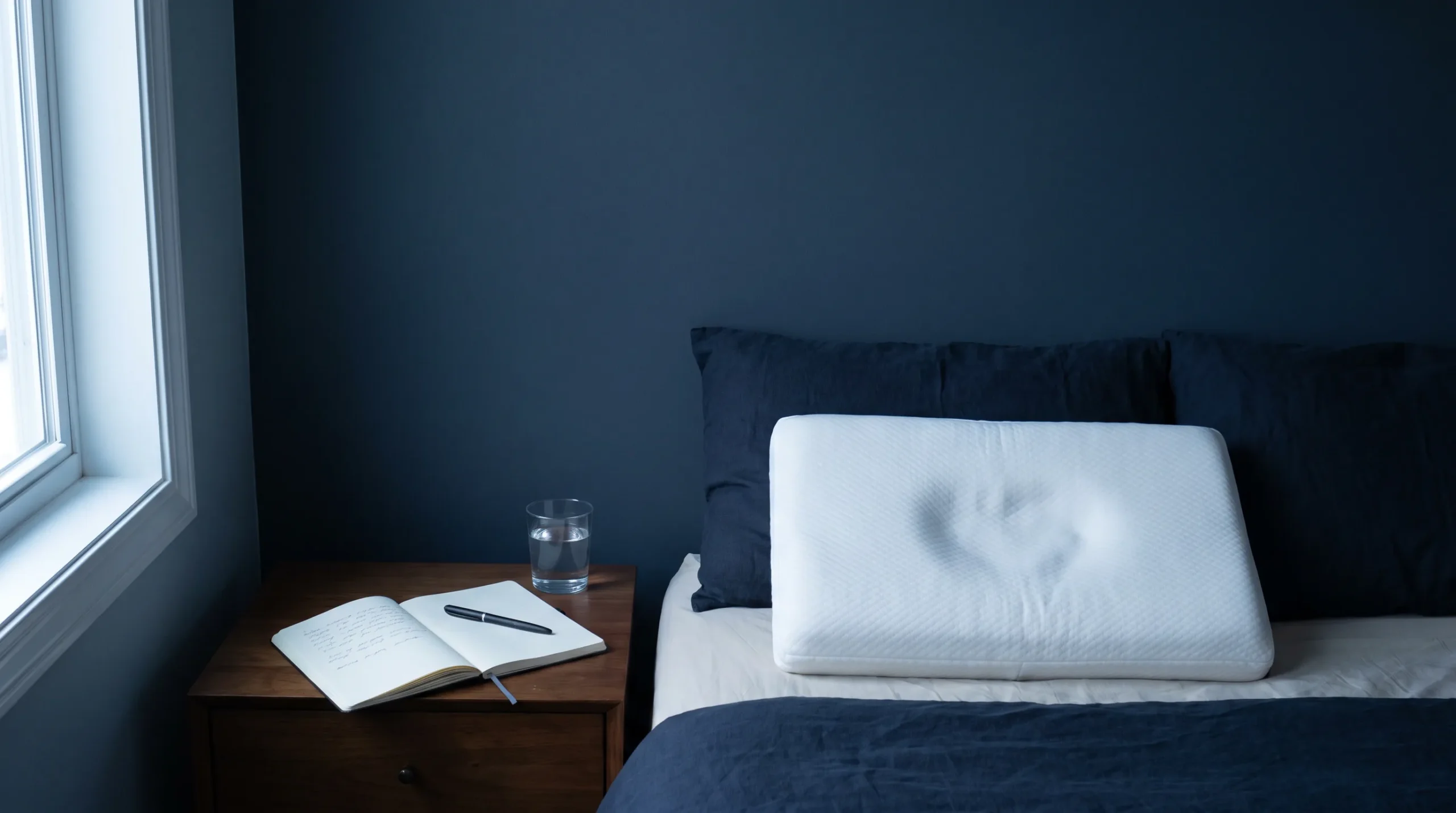
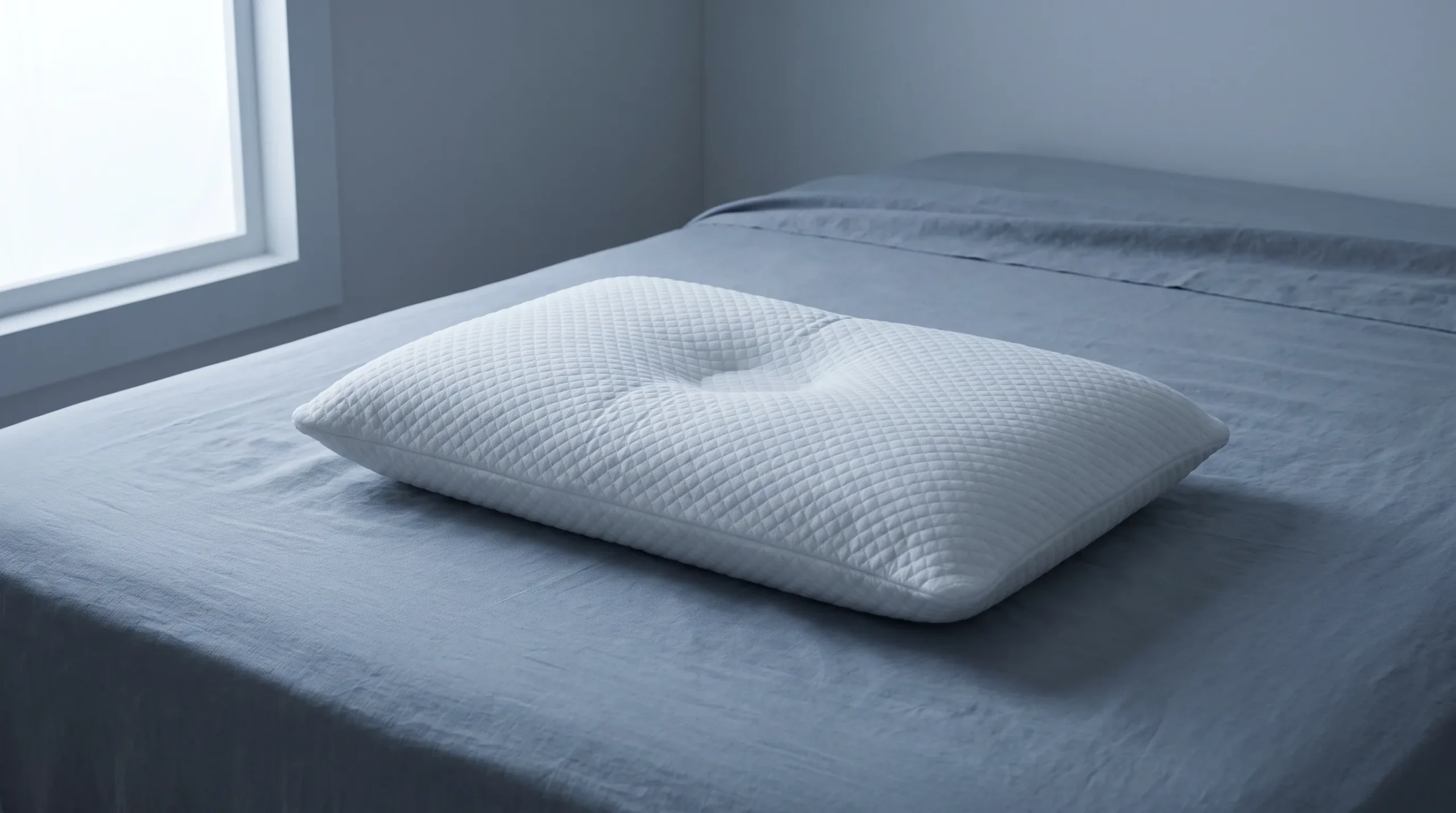
| Pillow surface under the ear | Whether the ear is loaded at all | A pillow with an opening for the ear, or a U-shaped pillow laid flat so the ear sits in the centre gap |
| Loft | Head tilt: too low and the head rolls onto the lower ear; too high and it pivots onto the top of the ear | A loft that fills the space between ear and shoulder — the same rule covered in our side sleeper pillow guide |
Vendor pages mostly address the first row, because that is what they sell. The other three cost less.
What do clinicians do when pressure on the ear becomes painful?
They take the pressure off the ear, usually before considering anything more invasive. The best-documented example is a painful nodule on the rim of the ear called chondrodermatitis nodularis helicis (CNH), which every report below manages by relieving pressure on the affected ear. It is a medical diagnosis, not something to self-diagnose from an article — but the way it is managed shows what clinicians do for a loaded ear.
Moncrieff and Sassoon compared 41 patients treated surgically with 15 treated with a home-made pressure-relieving device. Thirteen of the 15 (87%) were healed at one month and avoided surgery; 14 of the 41 surgical patients (34%) had a recurrence. The authors recommended managing the condition conservatively first.
At Wrexham Maelor Hospital, Sanu and colleagues gave 23 patients a doughnut-shaped pillow designed to relieve pressure on the affected ear; 13 remained pain-free a year later, and the authors called the approach “very cost effective”. Later reports from dermatologists describe cheaper versions of the same idea: self-adhering foam for pressure relief during sleep (Christie Travelute, Dermatologic Surgery, 2013) and an ordinary U-shaped neck pillow (Arooj Mohammed and colleagues, Indiana University, JAAD, 2020).
| Approach (published) | Who | What it does |
|---|---|---|
| Home-made pressure-relieving device | Moncrieff & Sassoon, 2004 | 13 of 15 healed at one month |
| Doughnut-shaped pillow | Sanu, Koppana & Snow, 2007 | 13 of 23 pain-free at one year |
| Self-adhering foam | Travelute, 2013 | Pressure relief during sleep (case method) |
| U-shaped neck pillow | Mohammed, Isaacs & Rahnama, 2020 | Budget alternative to a dedicated ear pillow (letter) |
None of these studies looked at earbuds. What they establish is narrower: when the outer ear hurts from overnight pressure, clinicians reach for an opening under the ear. If you have a firm, tender lump on the rim of your ear, or ear pain that does not settle when the earbuds come out, see a clinician rather than a pillow.
How do you set up a pillow so the ear sits in a gap?
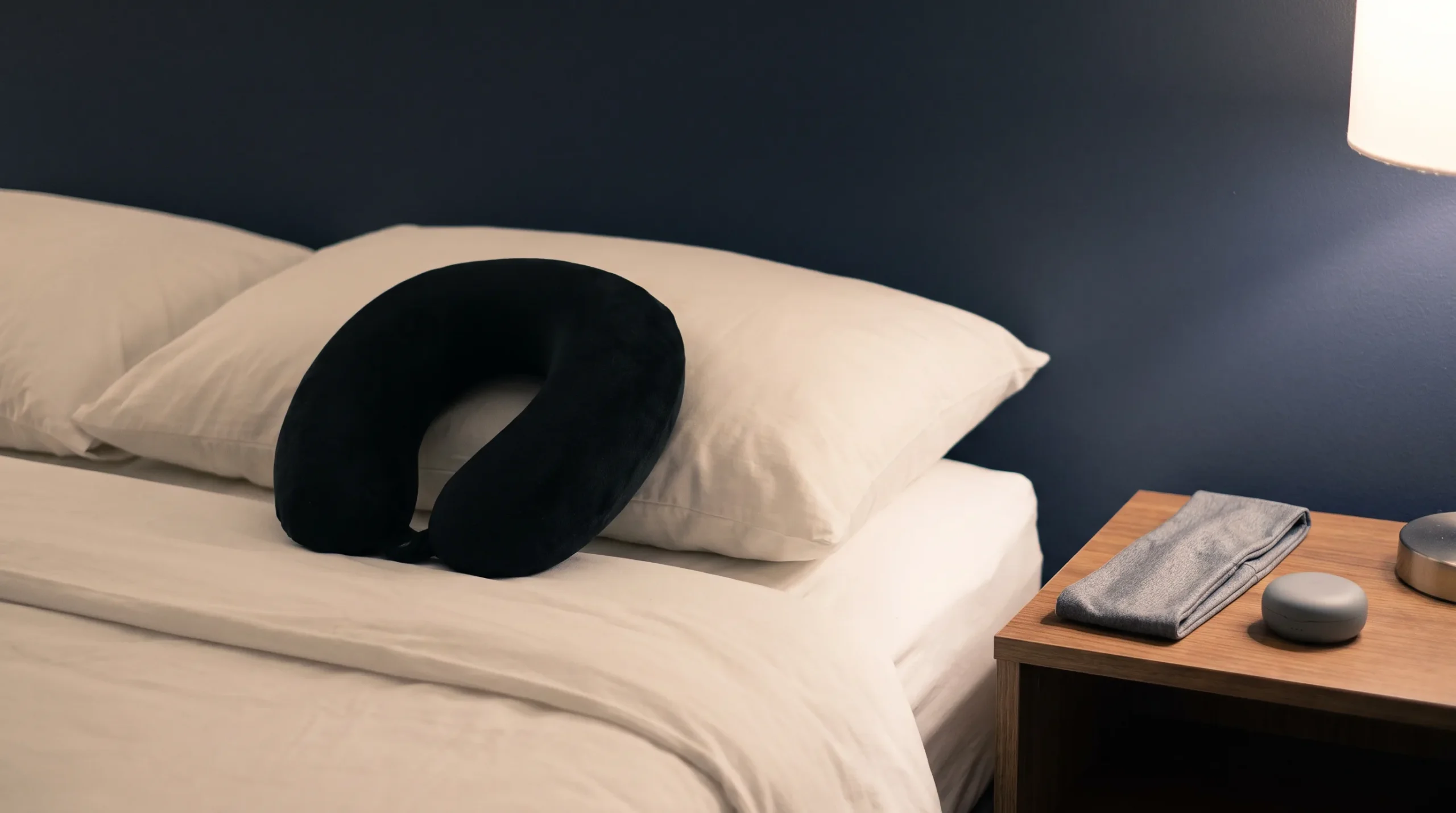
You can make the gap with something most households already own: a U-shaped travel neck pillow. The Aeris Travel Pillow, for example, is a 30 × 29 × 9 cm memory foam U. Laid flat on top of your bed pillow with the opening facing your shoulder, its centre hole becomes a pocket for the lower ear. The cheek and temple rest on the foam ring, and the ear — with or without an earbud — hangs in the space.
A few details make it work:
- Check the total loft. A travel pillow adds several centimetres. If your bed pillow was already right for you, a lower one underneath may be needed, or the head will tip upward. Our rounded-shoulders setup guide shows how to read that tilt.
- Keep the ring firm enough to hold its shape. A ring that collapses under the head closes the gap it was meant to create.
- Expect to roll. Most people change position several times a night, as covered in why you change sleep positions. The gap only protects the ear while you are on that side, which is one more reason to keep night-time audio short.
A contour pillow does a different job: no gap under the ear, but two profiles that let you match loft to shoulder width so the head sits level.
What can side sleepers use instead of earbuds?
That depends on why you wear them. If you want sound, the alternatives move the hardware off or away from the ear; if you want silence, an earplug does that job with less hardware.

| Option | What sits in or on the ear | Trade-off |
|---|---|---|
| Low-profile sleep earbuds | A small bud in the canal | Least pressure of the in-ear options, but still in-ear: wax and moisture issues remain |
| Headband headphones | Thin flat speakers inside a fabric band | Nothing in the canal; the band can shift, and the speakers still sit on the ear |
| Bedside or under-pillow speaker | Nothing | Cleveland Clinic’s preferred option: no pressure, lower infection and wax risk, easier volume control; a partner hears it too |
| Soft foam earplugs | Soft foam that expands to fit | Silence only, no audio; in the 2026 sleep-lab trial, earplugs protected sleep from intermittent noise |
On the last row: Mathias Basner’s University of Pennsylvania team ran 25 healthy adults through seven polysomnography nights. Earplugs proved efficacious against intermittent environmental noise; pink noise reduced REM sleep. More in pink noise for sleep.
Is it safe to fall asleep with earbuds in at all?
For most adults it can be, with limits. Cleveland Clinic’s four safety rules are short: keep the volume at about half or lower — low enough that someone nearby could speak to you and you would still hear them; use a timer so the audio ends after you fall asleep; skip noise-cancelling modes so you can still hear an alarm; and clean the earbuds at least weekly.
The volume rule has a measurable basis. The WHO-ITU safe-listening standard for personal audio devices sets a weekly sound allowance of 80 dB for 40 hours for adults (75 dB for children). Eight hours a night, seven nights a week is 56 hours — beyond the allowance at that level before the day’s listening is even counted. A sleep timer is the simplest way to stay inside it.
The other two risks come from having something in the canal all night: earbuds can push earwax deeper, and they can trap moisture, particularly after an evening shower, which favours outer-ear infections. Both are reasons not to wear in-ear hardware every night by default.
How do you know whether a change actually helped?
Change one thing at a time and give it a week. Swap to a headband, add a ring pillow and lower the volume on the same night, and you will not know which one worked. Our guide to running a sleep experiment on yourself lays out the one-variable method.
For ear pain the measure is simple: a 0–10 rating of the ear on waking, written down before you look at your phone, for seven nights with the change and seven without. A new pillow can also feel wrong for the first nights; this break-in guide separates adjustment from a genuine mismatch.
Frequently asked questions
Why does only one ear hurt after sleeping with earbuds?
Because only one ear carries your head. Side sleepers usually favour one side, so the lower ear takes hours of pressure while the upper ear takes almost none. If the sore ear is always the same one, alternating sides or giving that ear a gap in the pillow addresses the cause rather than the earbud.
Are sleep earbuds worth it for side sleepers?
They reduce the problem rather than remove it. A smaller, flatter bud lowers the peak pressure but still sits in the ear canal, so the wax and moisture issues remain. If the goal is quiet rather than sound, foam earplugs do that with less hardware.
Can a pillow with a hole stop ear pain?
It can take the pressure off the ear, which is the part a pillow controls. Pillows with an opening for the ear are what clinicians used in published reports on pressure-related ear pain, and a U-shaped neck pillow laid flat does the same job. Pain that continues after the earbuds come out needs a clinician, not a pillow.
Is it bad to sleep with noise-cancelling earbuds?
Cleveland Clinic advises skipping noise-cancelling modes at night, because fully tuning out the room can stop you hearing an alarm, a phone or an emergency. If outside noise is the problem, soft foam earplugs reduced the effect of night-time noise on sleep in a 2026 laboratory trial.
How loud is too loud for falling asleep to audio?
A practical test is whether someone beside you could speak and still be heard — Cleveland Clinic’s rule of thumb is about half volume or lower. The WHO-ITU standard sets a weekly allowance of 80 dB for 40 hours for adults, and all-night playback uses that up quickly, so a sleep timer matters.
Should I see a doctor about ear pain from sleeping on my side?
Yes, if the pain lasts after you stop wearing earbuds, if there is a firm tender lump on the rim of the ear, or if you notice discharge, itching or muffled hearing. Those need an examination, not a different pillow.
Taking the load off the ear
Most of the fix for earbud ear pain is on the bed, not in the ear: a gap under the ear, a loft that keeps the head level, short audio at low volume, and earplugs when quiet is all you want. A U-shaped travel pillow is the low-cost way to test the gap idea for a week before changing anything else.
Figures below are based on the maker’s production specifications; the research above is published work rather than an in-house trial. Anyone with persistent ear pain or a tender lump on the ear should speak to a clinician.
Advertisement

FirmNest Extra Firm Pillow
64 × 40 × 14 cm, 1.5 kg extra-firm memory-foam core.
See the FirmNest Extra Firm Pillow on AmazonProducts mentioned in this guide
 Aeris Travel Pillow — U-shaped memory foam, 30 × 29 × 9 cm, 0.4 kg; ships with earplugs and an eye mask
 Aeris Contour Pillow — 60 × 40 cm, 12–10 cm contour profile, 1.4 kg memory foam core
- MUSICOZY Sleep Headphones Headband — Bluetooth 5.4, flat speakers in a stretch fabric band